
Engineering the Next Generation of Artificial Heart Valves
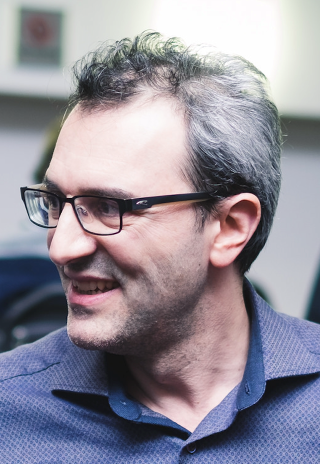
Professor Gaetano Burriesci
Gaetano Burriesci is Professor of Bioengineering at the University of Palermo, Italy, Honorary Professor at University College London (UCL), UK, and Coordinator of the Bioengineering and Medical Devices Group and the Bioengineering Technology Platform at Ri.MED Foundation, Italy. During his research career, he has built an extensive academic and industrial research experience in many bioengineering disciplines, which include structural and fluid-dynamic analysis of complex cardiovascular systems, biomaterials and medical devices. Driven by the escalating need for a more sustainable new generation healthcare, he has focused his activity in the definition of transformative healthcare treatments. In collaboration with major biomedical industries, he has led the development of novel therapeutic technologies (over 50 patents) that are now widely adopted and are contributing to redefine cardiovascular healthcare.
Coupling Multifunctionally and Bioinspiration for Lightweight Aero-Structures using Thermo-Elastic Stress Analysis
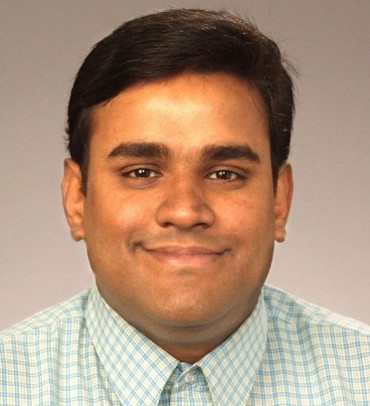
Professor Raj Das
Prof Raj Das leads the ‘Simulation and Modelling’ team in the Department of Aerospace Engineering at RMIT University in Australia. He is also an adjunct academic at the University of Auckland (New Zealand) and the University of Quebec (Canada). He is a principal investigator of the ‘Sir Lawrence Wackett Defence and Aerospace Research Centre’ of RMIT University. He is the Chair of the ‘National Committee on Applied Mechanics’ of Engineers Australia, Vice President of the ‘International Congress on Fracture’ and past President of the ‘International Committee on the Mechanical Behaviour of Materials’.
Prof Das has published more than 400 papers in international journals and conferences. Prof Das has a PhD from Monash University, Australia in Structural Optimisation and Failure Analysis. Prof Das has previously worked in the University of Auckland, the Commonwealth Scientific and Industrial Research Organisation (CSIRO), and the University of Manchester.
Prof Das has research interests in computational mechanics, fracture mechanics, dynamic fracture, damage tolerance analysis, and multi-scale modelling in metals and composite materials. Prof Das has been extensively promoting applied mechanics, computational mechanics and fracture mechanics research within the Australasian region. He was the chair of four major scientific conferences recently held in Australia and New Zealand. He has served on the scientific committees of more than 150 international conferences. Prof Das is on the editorial board and review panel of several journals and funding agencies.
Prof Das has been granted several national and international awards and fellowships, including the ‘Sir George Julius Medal’ by Engineers Australia, ‘Science Award’ by the Sustainable Aviation and Energy Research Society, ‘RMIT Team Award for Impact and Collaboration as part of the Multifunctional Composite Materials Group, ‘Computational Methods Award’ by ICCM, ‘Jim & Hazel D. Lord Emerging Faculty Fellowship’, ‘Research Excellence Award’, and ‘AUEA Emerging Researcher Award’ by the University of Auckland. He has received the ‘CONICYT award’ from the Government of Chile, ‘Certificate of Merit Award’ from the International Association of Engineers, Hong Kong, ‘UQAC Visiting Fellowship’ from the University of Quebec, Canada, and ‘Visiting Researcher Fellowships’ from the Sapienza University, Italy, the University of Cape Town, South Africa, and the University of Canterbury, New Zealand
Investigating thermomechanical couplings in elastomers by using surface calorimetry
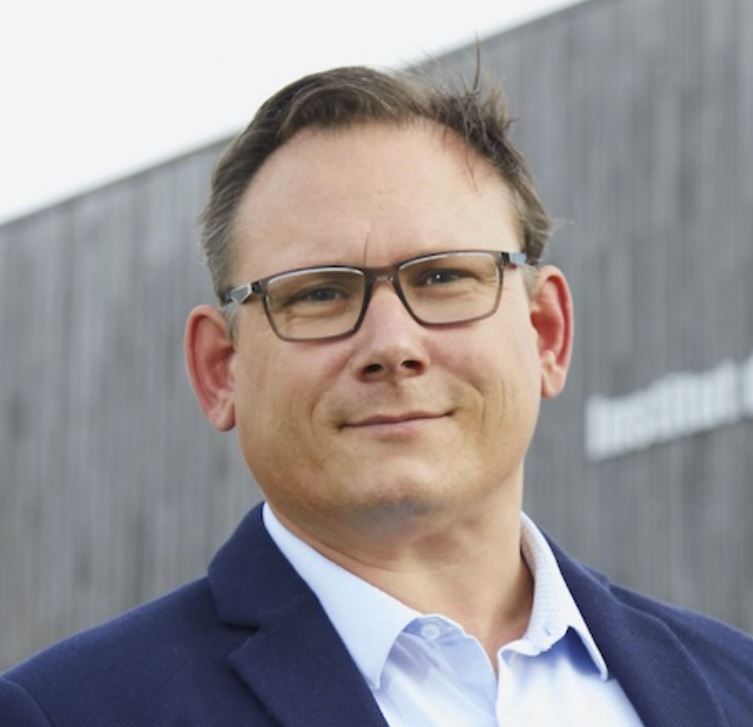
Professor Jean-Benoît Le Cam
Prof. Jean-Benoît Le Cam received the M.Eng. degree in mechanical engineering from Conservatoire National des Arts et Métiers, Orléans, France, in 2002, the M.S. degree in applied mechanics from Ecole Centrale de Nantes, France, in 2002, and the Ph.D. degree in mechanical engineering from Ecole Centrale de Nantes and University of Nantes, France, in 2005. From 2006 to 2011, he was an Assistant Professor at the French Institute of Advanced Mechanics (SIGMA Clermont), France, where he worked on mechanics and thermomechanics of elastomers. In 2010, he was appointed director of the Structures and Mechanics of Materials department at SIGMA and he obtained the French Habilitation to Supervise Research (HDR). Since 2011, he is a Professor at Institute of Physics Rennes, University of Rennes (UR), France, where he is the leader of the Quantitative Imaging in Mechanics of Materials Group. From 2015 to 2020, he held the Cooper Standard Chair in mechanics of elastomers at UR and managed the Research Laboratory (LC-DRIME) in Imaging, Mechanics and Elastomers, common to Cooper Standard, UR and the National Center for Scientific Research (CNRS). Since 2021, he manages the Research Laboratory (ELAST-D3) for the development, the durability and the dynamic properties of elastomers, common to Contitech, UR and CNRS. He has authored more than 120 papers in international peer-reviewed journals, is co-inventor of several international patents, and has co-edited several scientific books, including the most recent volume, Thermal Effects in Elastomers, published by Springer.